Dear Travelers,
According to Marcello Ravveuts, the transition to digital history is simply a progression from the spoken word to writing to printing to industry to mass communication. The creation of public websites is simply the next step towards progress.
The history of Public and Digital history is an interesting one. Historians have been using computers to help with analysis since the 1950s. The use of computers and the internet by historians can be explained in four separate stages, each able to be identified by a unique fingerprint.
In 1986, the Association for Historians and Computers was created. With the creation of this association, the use of computers by historians was legitimized by the academic community. This stage can be identified by the use of computers for quantitative analysis only. The use of computers would be expanded in 1991, when the modern world would be changed forever.
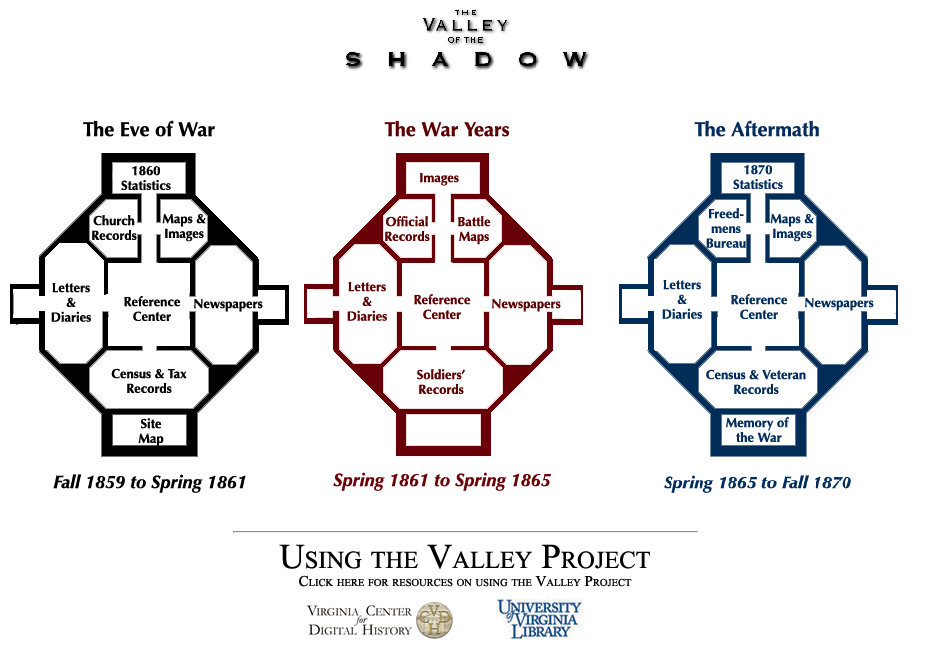
The World Wide Web, otherwise known as Web 1.0, was created in 1991 and would change the course of historical research forever. A website or database created during the era of Web 1.0 can be identified by the use of hypertext (hyperlinks). An example of this can be found in The Valley of the Shadow database (shown in the picture).
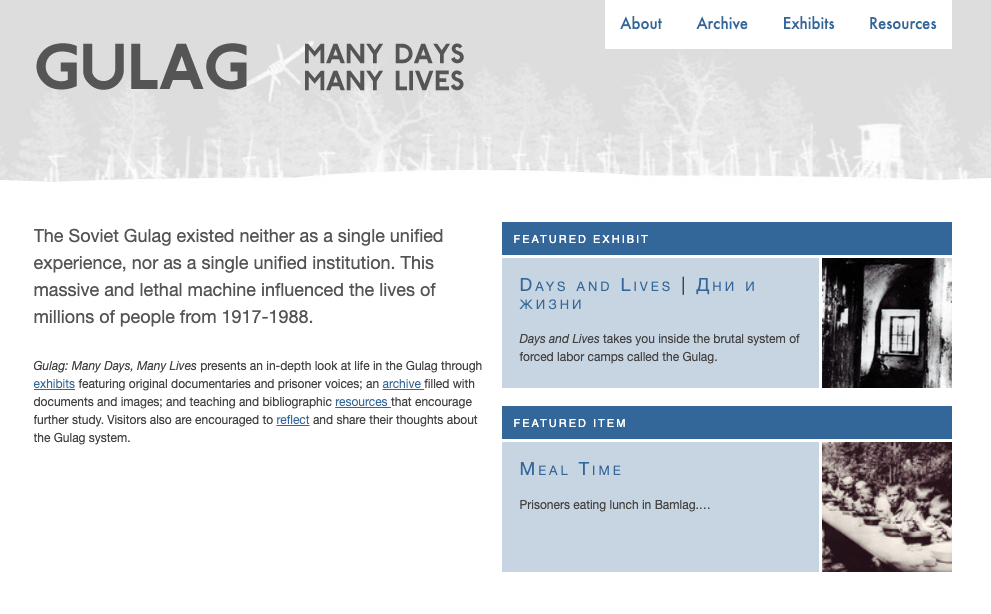
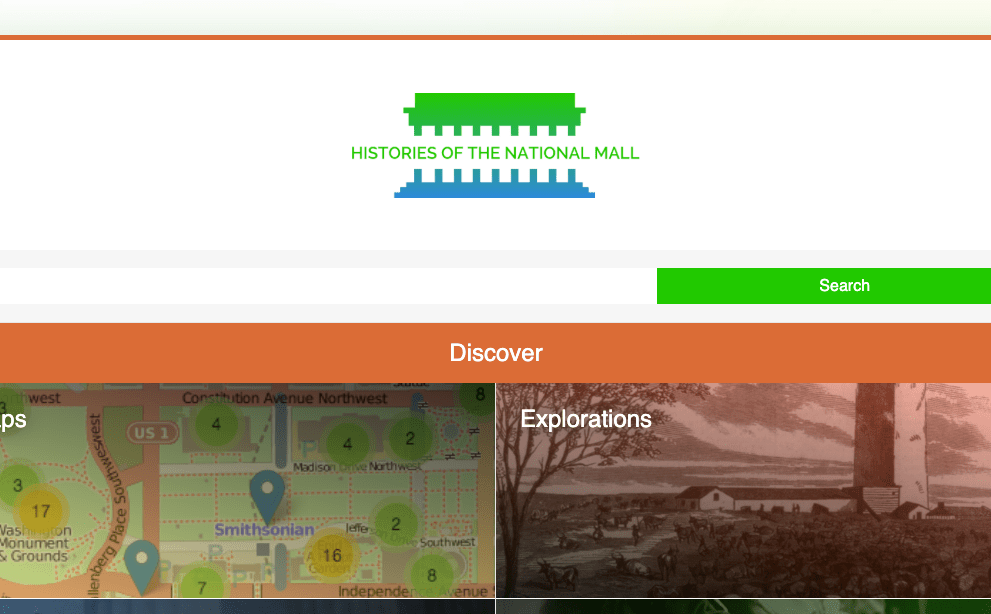
The next stage of development for digital and public historians was the creation of Web 2.0 from 2001 to 2004. With the creation of Web 2.0, the activities of blogging and Continuous Management Software became more common. Examples of historical databases and websites that were created during the stage of Web 2.0 are the Gulag: Many Days, Many Lives (pictured left) and The Histories of the National Mall (pictured right). Both of these databases utilize blogging systems to show different histories.
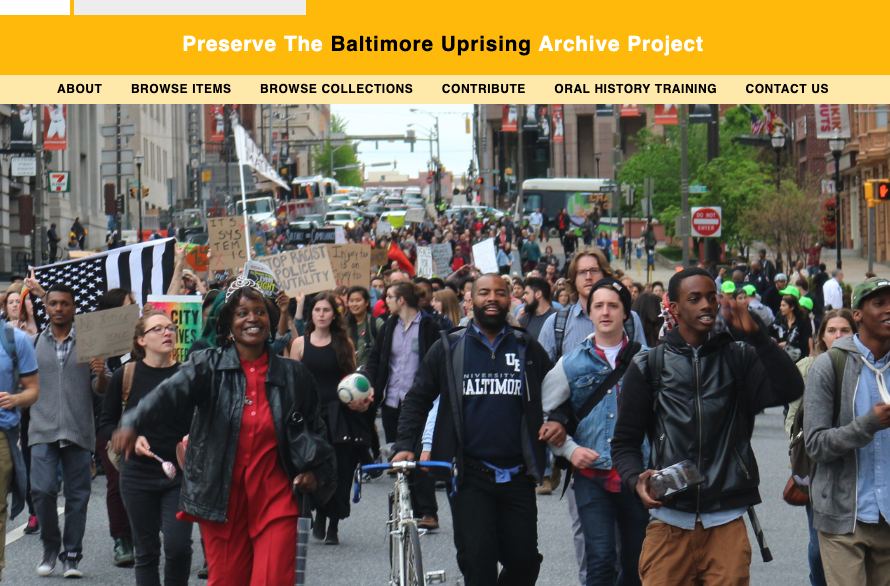
The final stage happened in 2006 with the first use of crowdsourcing for historical databases. Crowdsourcing for a historical database allows the public to submit their own stories and photographs to be included within the database. This allowed for all sides of a story to be shown within a single database. Examples of these are the September 11 Digital Archive and Preserve the Baltimore Uprising databases.
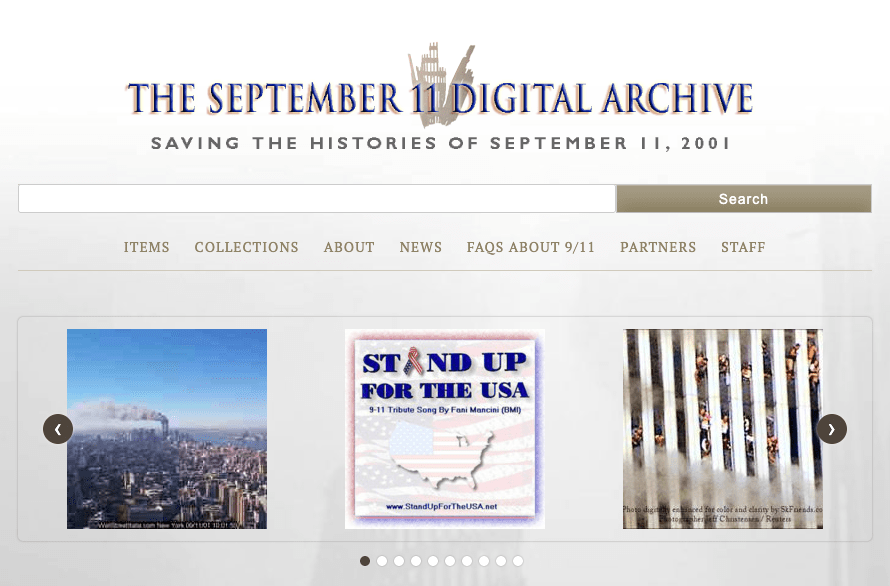
Sept. 11 Archive (left)
Preserve Baltimore (right)
Now let’s look in-depth at a single database, The Denig Manuscript (can be found at https://denigmanuscript.org).
The Denig Manuscript was created by Ludwig Denig (1755-1830) and looks at devotional, theological, and artistic traditions of revolutionary Pennsylvania. While the manuscript is physically held in the Winterthur Museum but can be accessed through the website.
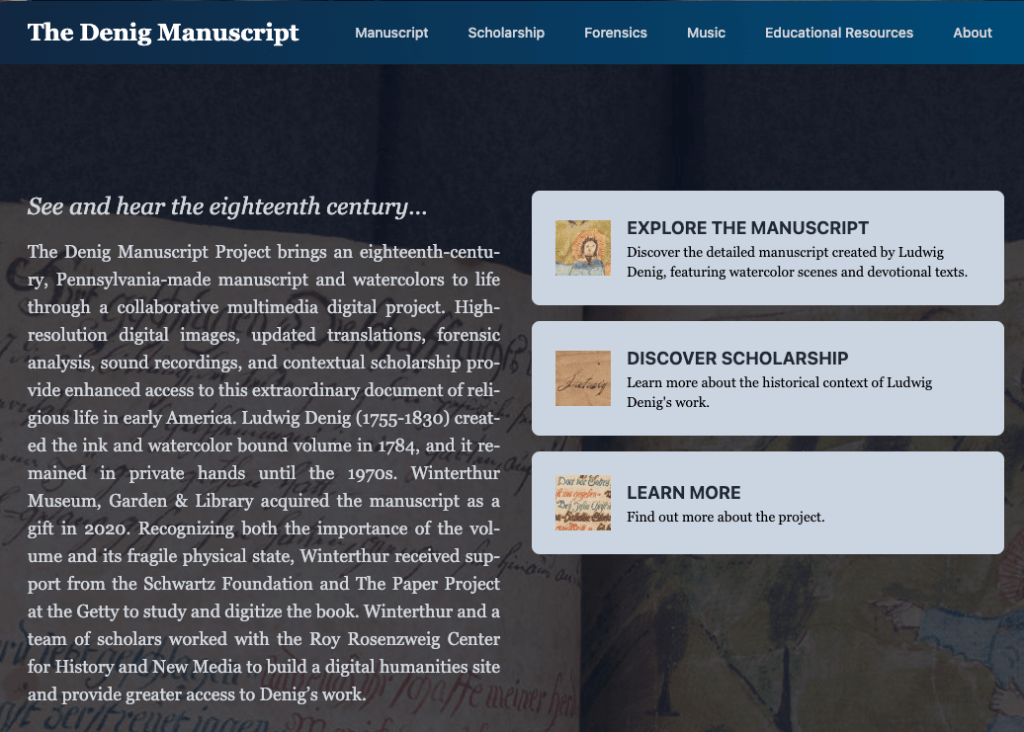
The website, created in 2024, is firmly in the Web 2.0 stage. Because of this, the website consists of blog-like articles as well as being more user-friendly. With its translations and exploration of the forensics of the document, it seems that the website was created for the general public to help them gain a better understanding of what life was like in revolutionary Pennsylvania.
Created through a collaboration between the museum, the Roy Rosenzweig Center for History and New Media, and financially supported by The Paper Project and the Schwartz Foundation, The Denig Manuscript is a not-for-profit website and exists only to further public knowledge.
The website is easy to navigate and does not require previous knowledge of navigating academic websites and archives. With its ease of use and functionality, The Denig Manuscript is easy to understand and follow. Having separate pages dedicated to the forensics of the manuscript (such as binding, x-rays of pages, and color analysis of the document), as well as a music section where the user can experience both the visual of historical music sheets with the music being played within the page, is extremely unique.
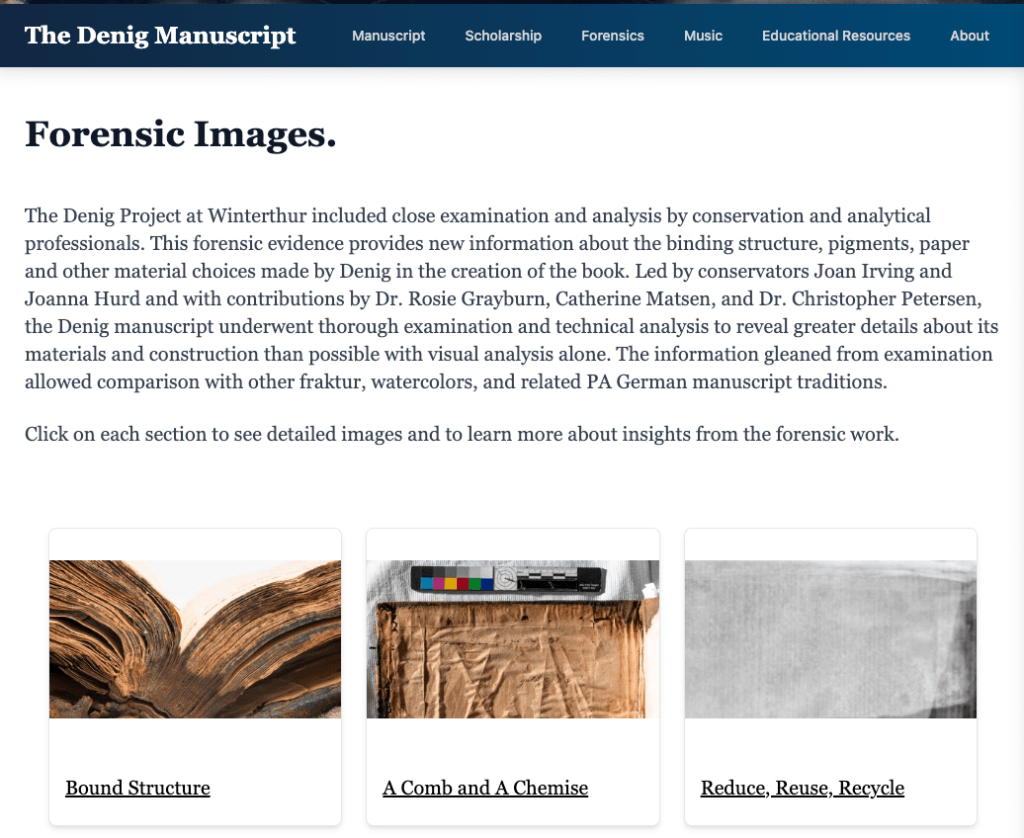
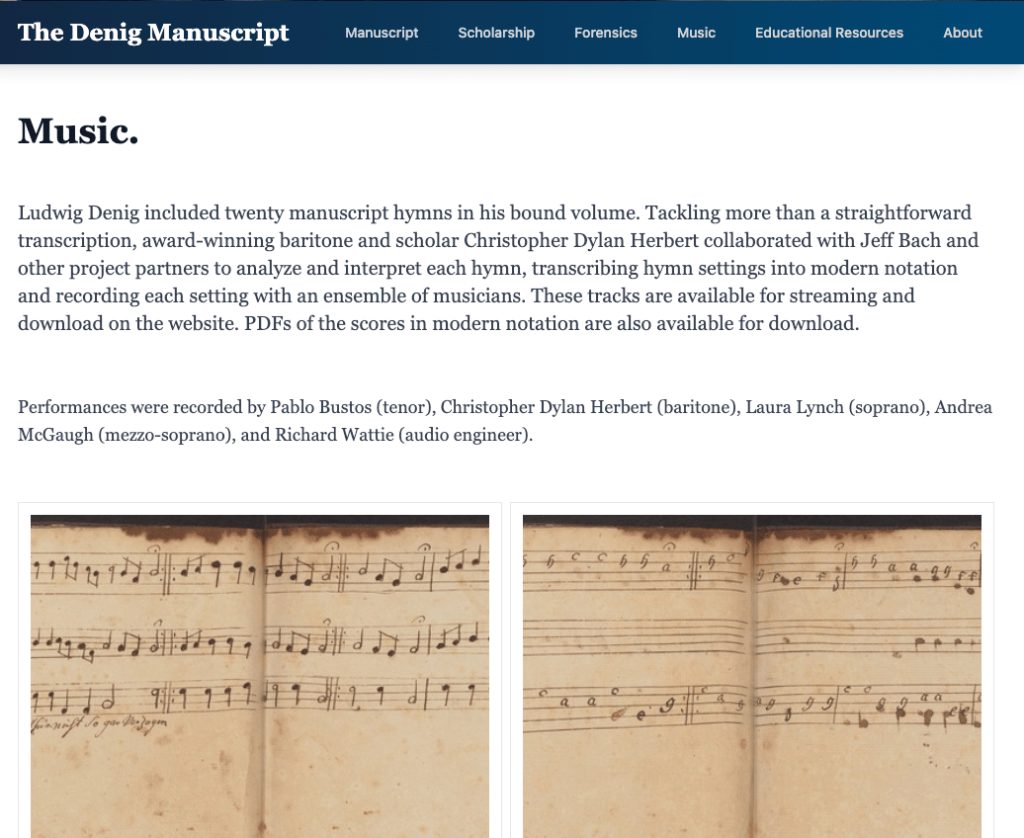
The Denig Manuscript is a perfect example of a digital exhibit. The website has six different pages outside of the homepage: Manuscript, Scholarship, Forensics, Music, Educational Resources, and About. Within each section, we can find a different aspect of the Denig Manuscript. Despite the inclusion of the Scholarship and Educational Resource sections, the in-depth description of a single document shows that this is a digital exhibit rather than an online archive, digital scholarship, teaching resource, or app.
Now you may be asking “Hannah, why have you spent the last five minutes talking about the development of digital history? Why does this matter?” And my answer to you will be, with the rise of Artificial Intelligence and history podcasts that give false and overly simplified historical stories, it is important to know where to find information that is correct and historically accurate.
While the rise of social media apps can help a person (aka. me) spread historical information and the stories of women who were forgotten in history, it is a double edged sword. Because it is easy for someone like me to share true historical stories, it is also easy for someone else to share false information.
Happy travels!
Hannah ❤️
 Hannah Pullen
Leave a comment