Dear Travelers,
You may have chosen to read this because you were curious what crowdsourcing is and what it has to do with history, and if that is the case, I’m happy to tell you all about it! On the flip side, you may already know about crowdsourcing within history and have a strong opinion about it, and if this applies to you, I’m here to give you a space to express your opinions!
Let’s start at the beginning and define what crowdsourcing is. Public historian Serge Noiret explains that within the discipline of public history, the point of crowdsourcing is for the historians to work in tandem with the audience to supply original historical content, the collection of data, oral testimonies, etc.
We will encounter two different types of crowdsourcing done by historians for digital projects: transcription and source collection.
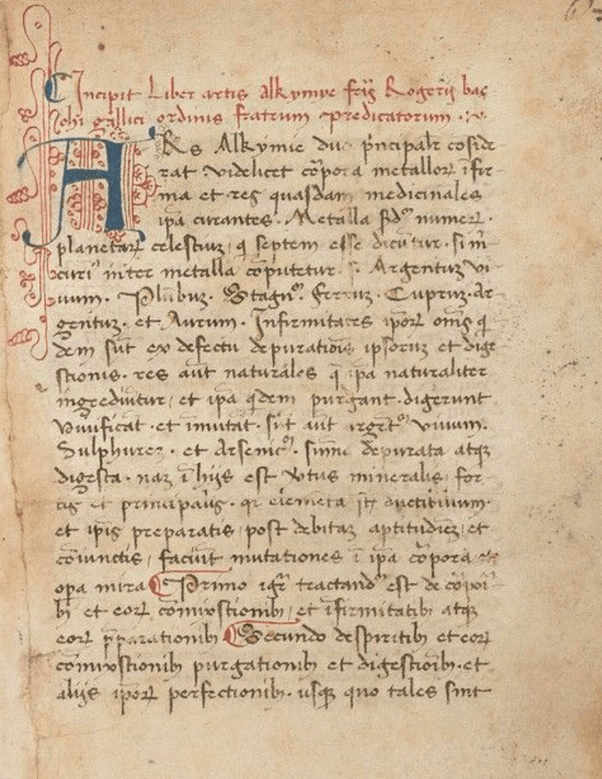
Transcription and Data Collection
The process of word-for-word copying of handwritten text or spoken words for the purpose of analysis and preservation.
Data collection includes the use of tags and keywords to index and describe digitized documents within a project.
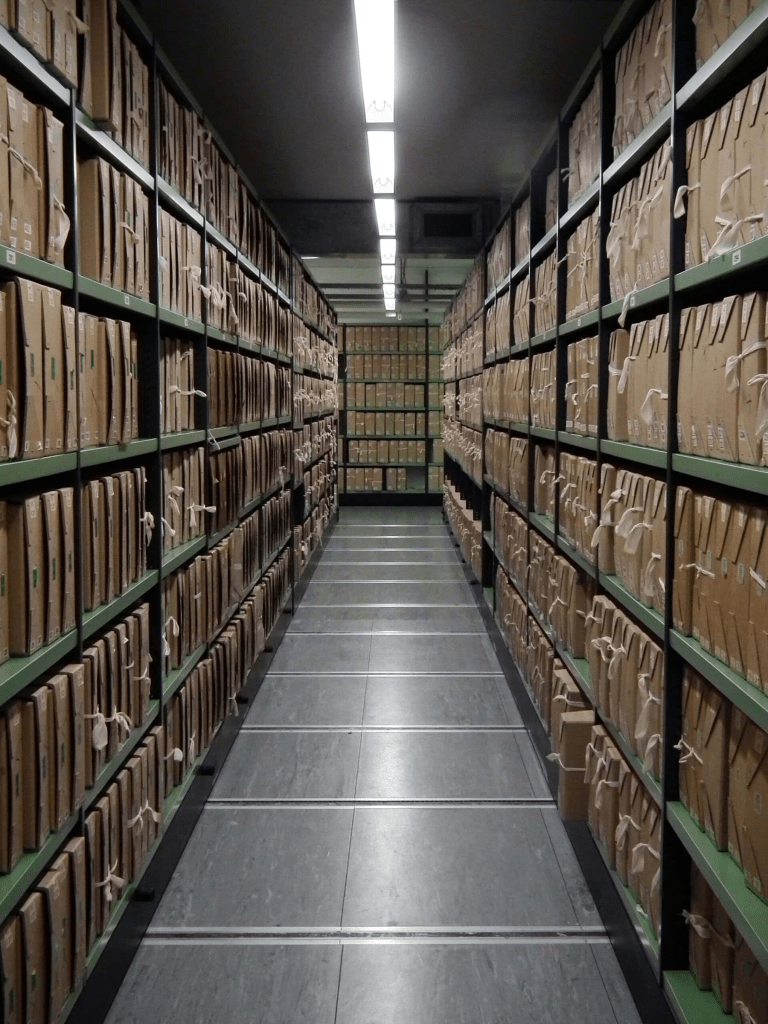
Source Collection
The process of donating digital materials, such as photographs and oral testimonies, for digitization within a Digital Public History project.
Most Digital History Projects are created with the purpose of telling the stories of the ordinary people and communities.
While the participation of the public may include members of the public donating their time or sharing their memories, it is not the purpose of including the public in these important projects. Terry Owens wrote that “the value of crowdsourcing lies not only in the productivity of the crowd but in providing meaningful ways for the public to enhance collections while more deeply engaging with and exploring them.”
Now that we have defined and expanded on what crowdsourcing is and the different types used for digital history projects, we will discuss the key themes that appear throughout the literature.
When a public historian begins a digital history project, they must first understand the intended audience. Serge Noiret and Pierluigi Feliciati, a researcher of Records and Information Science, explain the importance of knowing the audience of the project prior to its creation. It is this community that will participate in the crowdsourcing project, whose voices will be heard.
If the potential community of the project is such an important aspect of the project, how do we understand who the intended audience is? With some crowdsourcing projects, such as the September 11 and the Preserving the Baltimore Uprising Archives that we looked at last week, it is easy to deduce who the audience is. But for some, such as the project run by the National Archives, the intended audience is not as clear.
Another issue that arises is the question of the historian’s authority within the project. Does the historian running the digital project have unlimited authority to reject any submissions given to the project, or do they have to allow the public to give what they deem to be valuable? The project must remain historically accurate while allowing the public voice to be heard.
According to Noier, the sharing of authority in a digital project, like what is found in a crowdsourcing project, is implemented correctly when “collecting, filtering, and organizing digital information is based on critical methods,” likely with a given criterion. This criteria for acceptance in the project should be properly communicated and advertised to the public.
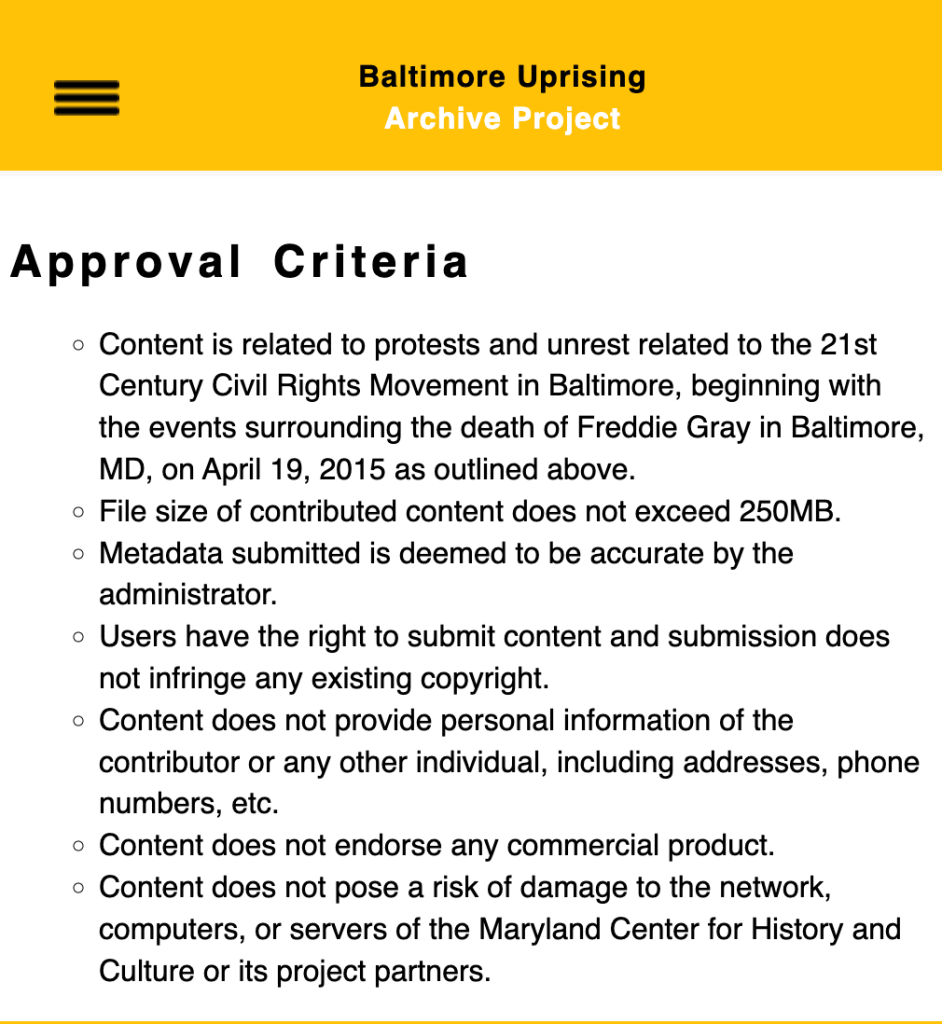
A fantastic example of this is found on the Preserve the Baltimore Uprising Archive website. At the bottom of their “About” page, they list the approval criteria for submissions to be allowed into the project. This allows the historian to preserve the historical integrity of the project while allowing the community to have a voice in what is included in the project.
I want us to look at two crowdsourcing projects and compare them. We will be looking at the “Making History” project run by the Library of Virginia (left), as well as the “Citizen Archivist” project run by the National Archives (right).
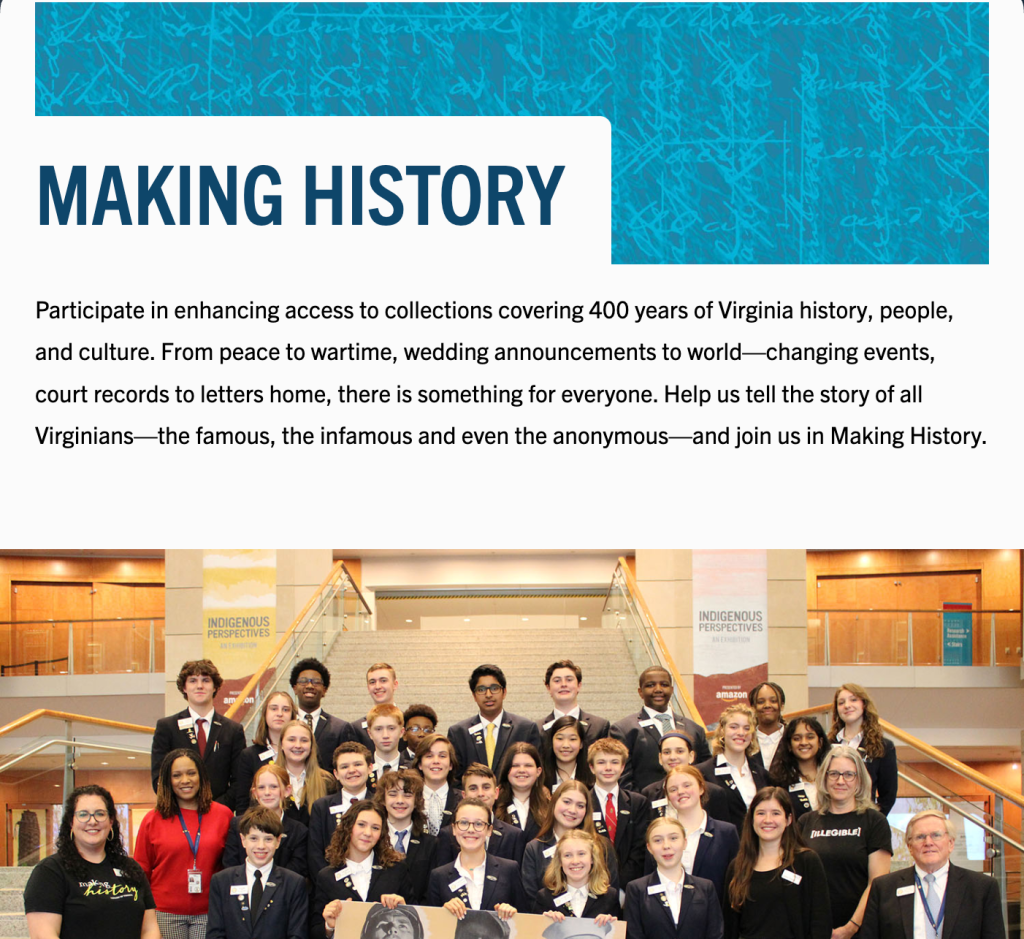
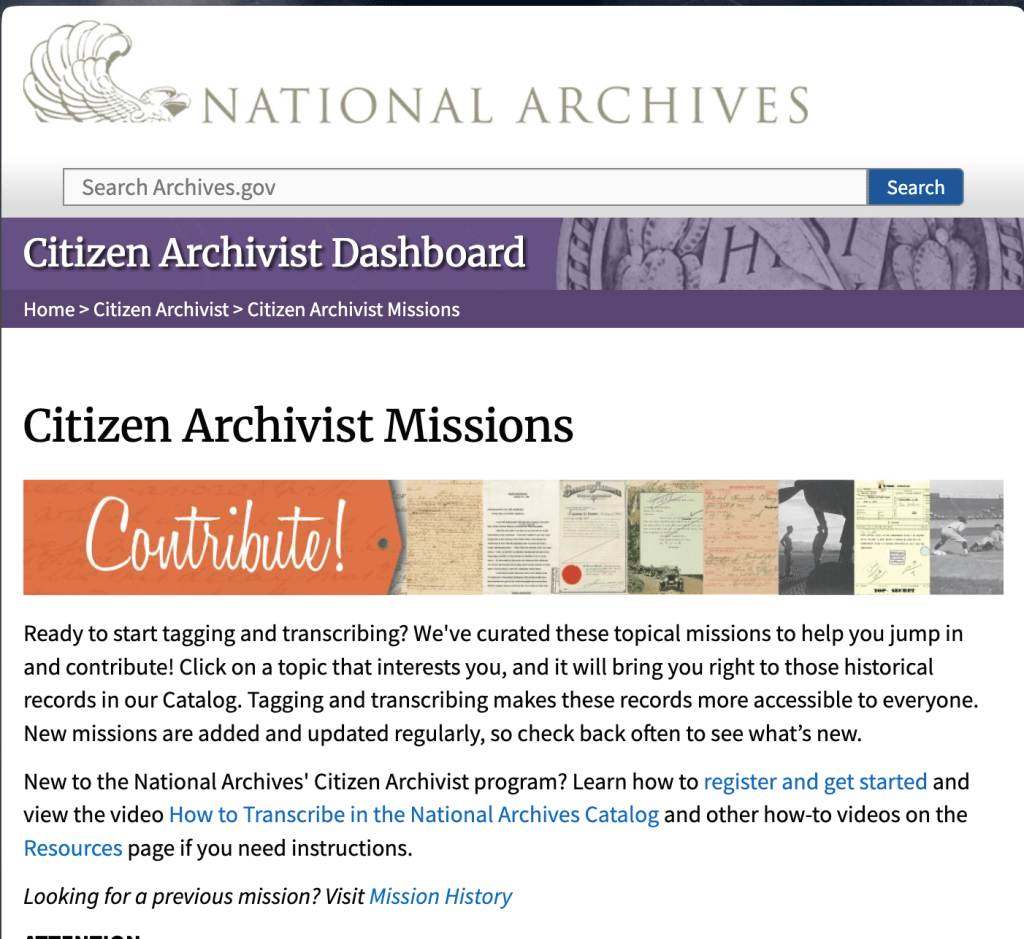
Both of these projects are transcription and data-based crowdsourcing, where members of the community donate their time to help transcribe the digitized documents within the archive.
The Library of Virginia has 5 active projects that volunteers can help transcribe and index, including World War II Separation Notices and the Virginia Untold: Free Registers.

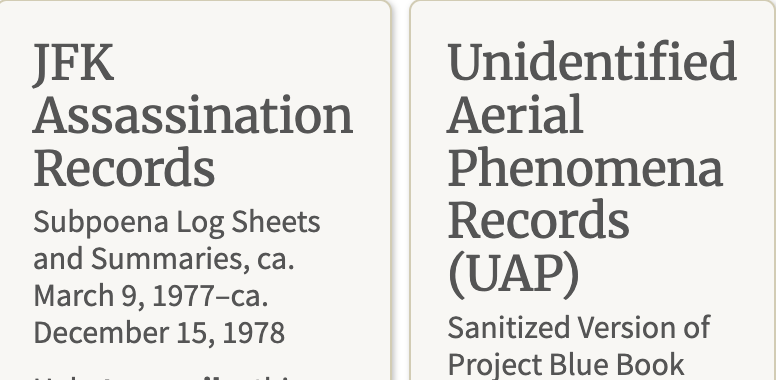
The National Archives has 24 active projects, including the transcriptions of the JFK Assassination Records and Unidentified Aerial Phenomena Records.
While the National Archives has more variety in the projects one can choose from, they do not explain what a community member is supposed to do or how to read certain documents. If one wishes to work with the National Archives on the “Citizen Archivist” project, I would suggest having prior experience volunteering with digital historical projects.
Unlike the National Archives, the Library of Virginia has a limited number of projects, but it has a dedicated page on how to transcribe documents, how to read early-modern calligraphy, and goes as far as to give a list of common names and misspellings one could find within letters. This is a perfect place for a person to start their journey of working with digital historians on their projects.
Whew! That was a lot of information. I can understand that this is a lot of information, but I would encourage you to look at your local libraries and universities to see if they have any active crowdsourcing projects!
What do you think about crowdsourcing in history? How should digital historians advertise crowdsourcing opportunities? Let me know!
Happy Traveling!
Hannah ❤️
 Hannah Pullen
Leave a comment